Estonia may not show up on Americans’ radar too often. It is a tiny
country in northeastern Europe, just next to Finland. It has the
territory of the Netherlands, but 13 times less people—its 1.3 million
inhabitants is comparable to Hawaii’s population. As a friend from India
recently quipped, “What is there to govern?”
What makes this tiny country interesting in terms of governance is not
just that the people can elect their parliament online or get tax
overpayments back within two days of filing their returns. It is also
that this level of service for citizens is not the result of the
government building a few websites. Instead, Estonians started by
redesigning their entire information infrastructure from the ground up
with openness, privacy, security, and ‘future-proofing’ in mind.
The first building block of e-government is telling citizens apart. This
sounds blatantly obvious, but alternating between referring to a person
by his social security number, taxpayer number, and other identifiers
doesn’t cut it. Estonia uses a simple, unique ID methodology across all
systems, from paper passports to bank records to government offices and
hospitals. A citizen with the personal ID code 37501011234 is a male
born in the 20th century (3) in year ’75 on January 1 as the 123rd baby
of that day. The number ends with a computational checksum to easily
detect typos.
For these identified citizens to transact with each other, Estonia
passed the Digital Signatures Act in 2000. The state standardized a
national Public Key Infrastructure (PKI), which binds citizen identities
to their cryptographic keys, and now doesn’t care if any Tiit and Toivo
(to use common Estonian names) sign a contract in electronic form with
certificates or plain ink on paper. A signature is a signature in the
eyes of the law.
As a quirky side effect, this foundational law also forced all
decentralized government systems to become digital “by market demand.”
No part of the Estonian government can turn down a citizen’s digitally
signed document and demand a paper copy instead. As citizens opt for
convenience, bureaucrats see a higher inflow of digital forms and are
self-motivated to invest in systems that will help them manage the
process. Yet a social worker in a small village can still provide the
same service with no big investment by handling the small number of
digitally signed email attachments the office receives.
Read More at the entire article in the link below..
http://www.eesti.ca/lessons-from-the-worlds-most-tech-savvy-government/article41332
Showing posts with label current affairs. Show all posts
Showing posts with label current affairs. Show all posts
Sunday, February 2, 2014



Monday, January 20, 2014
What Was Edward Snowden Doing in India?
(Source:Shane Harris, Foreign Policy)
Nearly three years before he revealed himself as the source of leaked documents about NSA surveillance, Edward Snowden traveled to New Delhi, India. There, he spent six days taking courses in computer hacking and programming at a local professional school, according to school officials and people familiar with Snowden's trip.
Working with a private instructor, Snowden, who was then a contractor for the spy agency, took a course in "ethical hacking," where he learned advanced techniques for breaking into computer systems and exploiting flaws in software. The class's ostensible purpose is to train students to protect computers and their contents from thieves and spies. But in order to do that, they learn how to break into computers and steal information. Snowden also inquired about...
Read full article in the link below..
http://www.foreignpolicy.com/articles/2014/01/12/what_was_edward_snowden_doing_in_india
Nearly three years before he revealed himself as the source of leaked documents about NSA surveillance, Edward Snowden traveled to New Delhi, India. There, he spent six days taking courses in computer hacking and programming at a local professional school, according to school officials and people familiar with Snowden's trip.
Working with a private instructor, Snowden, who was then a contractor for the spy agency, took a course in "ethical hacking," where he learned advanced techniques for breaking into computer systems and exploiting flaws in software. The class's ostensible purpose is to train students to protect computers and their contents from thieves and spies. But in order to do that, they learn how to break into computers and steal information. Snowden also inquired about...
Read full article in the link below..
http://www.foreignpolicy.com/articles/2014/01/12/what_was_edward_snowden_doing_in_india
Monday, December 30, 2013
Ariel Sharon Park, A Revolution In Waste Management & Urban Planning
 Ariel Sharon Park, A Revolution In Waste Management & Urban Planning (via Planetsave)
What do you do if you have a lot of trash, limited landfill space, problematic floodplains, and a growing population? It’s a common problem across the world, as the trends of population growth, wasteful consumption and an increasingly plastic, throwaway…
Friday, November 8, 2013
Why Socialist Kshama Sawant's Campaign Matters To Seattle
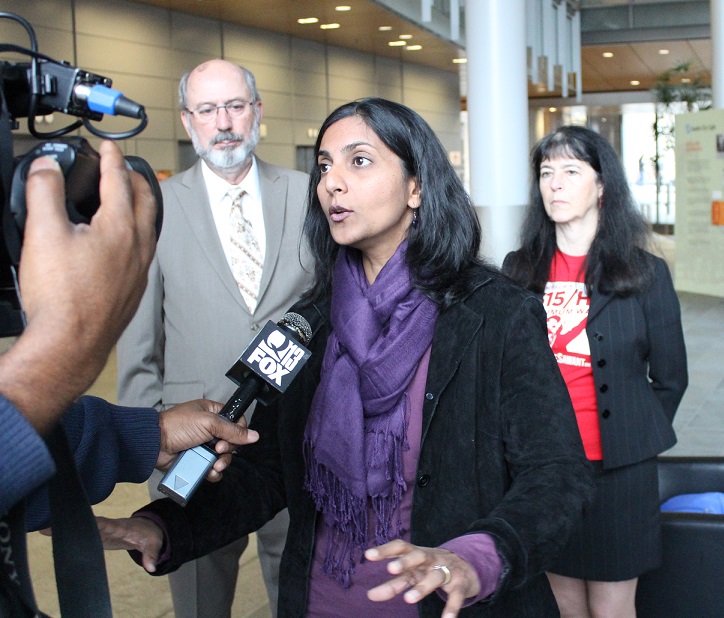
Kshama Sawant didn’t have to identify as a socialist.
Seattle City Council races are nonpartisan, after all, and her views aren’t particularly revolutionary, as far as Seattle goes: She supports a $15 minimum wage (as do both mayoral candidates), unions for low-wage workers and rent control.
But branding herself as a socialist – still a dirty word in many corners of American politics – may have helped her rake in 35 percent of the primary vote with little money. (She had raised about $110,000 as of Monday night.)
Councilmember Nick Licata, who has been on the council for 16 years, said Sawant’s message resonates because a section of voters are tired of risk-averse Democrats and Republicans. Sawant, he said, has managed to make socialist ideas appeal to voters.
“We don’t have a mature socialist political movement in the country, and probably the last time we did was literally 80 years ago,” Licata said. “To Sawant’s credit, she has been able to craft a message that is understandable, simple and eschews most of the rhetoric.”
Sawant ran against Richard Conlin, 64, a darling of the Democratic party with left-leaning views. Conlin appeared to be winning on Tuesday night with 54 percent of the vote when King County released its first results. Sawant received about 46 percent of the vote.
Sawant stayed on message throughout her campaign, using dry, academic language to discuss the issues she wants addressed. The roots of homelessness are within the roots of our capitalist society itself, she said at the October debate.
Later, on the social media site Reddit, she addressed rent control:
What rent control would do is provide housing security for tenants, who are at present continually forced to move due to rent increases demanded by price-gouging real estate companies. It would also address the serious income and race segregation in Seattle housing and enable low-income people, people of color, and immigrant communities to not be red-lined out of the city.It appears that Sawant, 41, won support on the strength of her message alone. She is a Mumbai-educated economics professor who rarely strays from her platform and who avoids discussing her private life – although she has grudgingly admitted that she is separated from her husband. She doesn’t wear pantsuits or coiffe her hair, and she rarely points to her past experiences or to endorsements.
Sawant’s political campaign director, Philip Locker, an organizer for the Socialist Alternative party, said that by running for office, Sawant pushed neglected issues into the spotlight.
“We’ve gotten an enormous response – we’ve even forced both Mayor Mike McGinn and Sen. Ed Murray to discuss the $15 minimum wage,” Locker said of the mayoral candidates. “That’s powerful.”
When Sawant speaks, her supporters cheer. The Stranger has endorsed her enthusiastically, and The Nation magazine, based in Washington, D.C., wrote about her this week in equally glowing terms.
The Nation noted that Eugene V. Debs, the socialist candidate for president in 1912, received more than 10 percent of the vote in the Western states, including Washington.
Sawant’s campaign in Seattle speaks to a similar sense of disgruntlement with the two-party system, The Nation wrote, saying that a “bold rejection of austerity has significant popular appeal.”
But even a century ago, when Debs won more than one million votes nationwide, no socialist was this close to winning a city council position in Seattle, Scott Cline, the city’s archivist said.
City council elections have been nonpartisan since 1910, Cline said, but “I have never seen any records that indicate a city council member has self-identified as a socialist or belonged to a socialist party.”
Cline said that before 1910, a number of socialist candidates ran, but none seem to have made it out of the primary elections.
“It is certainly possible that after 1910 there might have been a serious socialist challenge,” Cline said in an email to KUOW. “However, no name from general elections stands out as a strong socialist candidate; certainly not on par with Kshama Sawant.”
Cline searched through the available voters’ pamphlets dating back to 1983 and found there has been just one other socialist candidate for Seattle City Council who did well – Yolanda Alaniz. Alaniz came in second among four candidates in 1991. She lost to Sue Donaldson, 131,872 to 27,991.
“Nevertheless, nearly 28,000 votes is quite amazing for a socialist candidate,” Cline said.
Licata said he believes that Sawant won’t be an anomaly and that more fringe candidates — on the left and the right — will run for office in coming years.
“My hope is that she doesn’t disappear after the election if she loses,” Licata said on Monday, before Tuesday night's results. “She represents the poor, the immigrants, the refugees – the folks who are not in our City Council offices lobbying us.”
On Tuesday night, Sawant told her supporters that she's not going anywhere. She hinted that she might run against Conlin again if she loses. And she said that she views the passing of the $15 minimum wage in SeaTac as evidence of the left rising up.
Isolde Raftery @ kuow.org
Original article: http://kuow.org/post/why-socialist-kshama-sawants-campaign-matters-win-or-lose
Sunday, October 27, 2013
Venezuela Opens Deputy Ministry For The Supreme Social Happiness To Keep Track Of Social Programs
President Nicolás Maduro announced on Friday the creation of the Viceministerio para la Suprema Felicidad Social – a deputy ministry for the supreme social happiness. The institution will take care of complaints and applications to the services, and will monitor who is receiving what program and how it is being carried out.
The new institution will supervise the social programs the country has initiated since 2003, called Misiones. Such programs give free health care to the poorest citizens, help to the elderly and disabled, and access to education. When they launched, the Misiones gave Chávez’s presidency a much needed boost. Read the entire article here...
Venezuela Opens Deputy Ministry For The Supreme Social Happiness To Keep Track Of Social Programs
The new institution will supervise the social programs the country has initiated since 2003, called Misiones. Such programs give free health care to the poorest citizens, help to the elderly and disabled, and access to education. When they launched, the Misiones gave Chávez’s presidency a much needed boost. Read the entire article here...
Venezuela Opens Deputy Ministry For The Supreme Social Happiness To Keep Track Of Social Programs
Sunday, October 20, 2013
The Story Of Marinaleda, Spain's Thriving Model Communist Village

Despite the “big” failures of 20th century Communism, the 21st century boasts plenty of smaller, enduring victories against the neoliberal order. Marinaleda is one of those victories. Few of us have heard of Marinaleda, a small town of 2700 people, tucked away in Spain’s Andalusia region, around 100km east of Seville. The town’s official coat of arms states “Marinaleda – Una Utopia Hacia La Paz” (a Utopia towards Peace).
They are led by their charismatic mayor, Juan Manuel Sánchez Gordillo, who has held the position since 1979 – re-elected time after time with an overwhelming majority. In 2012, he became a household name in Spain after heading raids on local supermarkets to feed the Andalusian unemployed. Mr Sánchez Gordillo’s CUT-BAI party belongs to the Izquierda Unida (“United Left”),the Communist-led coalition.
The core of Marinaleda’s communist ethic is a 1,200 hectare co-operative farm that was won through a decade of occupations and hunger strikes from the Duke of Infantado. The Duke’s property was just one of many instances in Spain of vast estates with arable land fenced off from the area’s surrounding, usually starving, population. The farm, known as El Humoso, sells its products internationally. Fair-trade and “socially aware” brands often get a bad rap by critical theorists. But El Humoso makes a compelling counterpoint to the likes of Starbucks and Tom’s Shoes. “Know that when you consume any product from our co-operative, you are helping to create employment and social justice,” says Gordillo.
The eight agricultural co-operatives on the farm concentrate on labour intensive crop production such as artichokes, peppers, beans and also wheat and olive groves. Every worker gets paid the same wage – €47 for a six and a half hour working day. It may not sound like a lot, but it's more than double the Spanish minimum wage. Marinaleda, now has an unemployment rate of 5%. Spain, by constrast, has an unemployment rate of 27%.
Marinaleda, surprisingly, has no police. They didn’t abolish the police force, or violently expel its officers. Marinaleda had one police officer. When that officer retired, they never hired a replacement. Now, Gordillo has been known to chase down delinquent youths on his own and speak to their families. Surprisingly, it seems to work out.
A few times every year Marinaleda organize something called red and green Sundays. On these days everyone participates in making the town and the cooperative better for the whole. ‘Red Sunday’ means that everyone does something to improve the town – paint houses, fix pipes, improve pavements and similar jobs. ‘Green Sunday’ means that everyone works extra in the fields, harvesting, packing and so on. This free work benefits everyone who lives in Marinaleda.
Everyone in Marinaleda is employed and nearly everyone has a proper house. The housing policy is that once you have lived in Marinaleda for two years, you get materials to build your own house. The houses are built on municipal land, with materials provided by local and regional government. Local people pay just €15 a month while contributing an agreed number of working hours per month to the construction of the houses. This house cannot be sold, but given away to your children or to someone you choose. Just in recent years three hundred houses have been build.
As an example of Marinaleda’s socialist ideology and believing that power has to be put into the hands of local people, the local Council has created General Assemblies where around 400 to 600 local people meet 25 to 30 times a year to voice their concerns and vote on issues. A further example of the Council’s form of local democracy is the use of “participatory budgets” whereby each year the Council’s proposed investments and expenditures are taken to local areas for discussion.
Marinaleda certainly is a breath of fresh air in a dark Spanish crisis, and might motivate others to live differently.
Thursday, August 15, 2013
Why does America have such a big prison population?
 Why does America have such a big prison population? (via The Economist)
“TOO many Americans go to too many prisons for far too long, and for no truly good law-enforcement reason.” The person who said that was neither a defence lawyer, nor a prisoners’-rights advocate, nor a European looking down his nose across the…
Tuesday, July 30, 2013
SERCO: The Biggest Company You've Never Heard Of
Serco Group are the world's leading outsourcing company with a vast and diverse portfolio of government contracts. These contracts are worth billions of pounds each year and means that the control of public services are passed to this privately owned company. Among its operations are public and private transport and traffic control, aviation, military and nuclear weapons contracts, detention centres and prisons and schools. Serco has seen a large amount of criticism involving its private prisons and detention centres.
Another video from RT examines their role in public services across the world.
This video from the Hungry Beast, broadcast on Australia's ABC network, give's a brief introduction to Serco and the services they run across the world.
Another video from RT examines their role in public services across the world.
Wednesday, May 29, 2013
We Are Now One Year Away From Global Riots, Complex Systems Theorists Say
What’s the number one reason we riot? The plausible, justifiable motivations of trampled-upon humanfolk to fight back are many—poverty, oppression, disenfranchisement, etc—but the big one is more primal than any of the above. It’s hunger, plain and simple. If there’s a single factor that reliably sparks social unrest, it’s food becoming too scarce or too expensive. So argues a group of complex systems theorists in Cambridge, and it makes sense.
In a 2011 paper, researchers at the Complex Systems Institute unveiled a model that accurately explained why the waves of unrest that swept the world in 2008 and 2011 crashed when they did. The number one determinant was soaring food prices. Their model identified a precise threshold for global food prices that, if breached, would lead to worldwide unrest.
The MIT Technology Review explains how CSI’s model works: “The evidence comes from two sources. The first is data gathered by the United Nations that plots the price of food against time, the so-called food price index of the Food and Agriculture Organisation of the UN. The second is the date of riots around the world, whatever their cause.” Read More...
http://motherboard.vice.com/blog/we-are-now-one-year-and-counting-from-global-riots-complex-systems-theorists-say--2#ixzz2UZHy1OUO
Sunday, May 26, 2013
Jib.li connects people who need to send something, somewhere, with those travelling that way.

Jib.li connects people who need to send something, somewhere, with those travelling that way. Jibli is pronounced dʒi:b li: which means Bring Me in Arabic.
Founded in Dec 2011 and based in Paris, Jib.li is a social platform that connects people who are travelling, with those who want to ship something. The site was designed and developed by two young Algerian information technology engineers. Jib.li is based on social networks to build trusted relations between people. It could be to send your keys to your roommate who lost them when you're on holidays, or maybe a sudden desire to taste your grama's delicious cookies. You can also just carry stuff for people to make some money.
The newborn site provides a platform for those seeking to get round the classic excess baggage weight problem. A search engine allows users to see who is available to transport certain objects, what routes they are travelling on and the price offered for the service. Similarly, those who may have some spare room in their suitcase can post an advertisement stating their departure and arrival cities and can search for objects to transport.
The concept is simple and easy to use and is just a way of formalising a practice which is already in vogue among those who are often led to travel, especially young passengers.
Link to jib.li
Founded in Dec 2011 and based in Paris, Jib.li is a social platform that connects people who are travelling, with those who want to ship something. The site was designed and developed by two young Algerian information technology engineers. Jib.li is based on social networks to build trusted relations between people. It could be to send your keys to your roommate who lost them when you're on holidays, or maybe a sudden desire to taste your grama's delicious cookies. You can also just carry stuff for people to make some money.
The newborn site provides a platform for those seeking to get round the classic excess baggage weight problem. A search engine allows users to see who is available to transport certain objects, what routes they are travelling on and the price offered for the service. Similarly, those who may have some spare room in their suitcase can post an advertisement stating their departure and arrival cities and can search for objects to transport.
The concept is simple and easy to use and is just a way of formalising a practice which is already in vogue among those who are often led to travel, especially young passengers.
Link to jib.li
Thursday, April 11, 2013
The Tunnel People That Live Under The Streets Of America
Did you know that there are thousands upon thousands of homeless people that are living underground beneath the streets of major U.S. cities? It is happening in Las Vegas, it is happening in New York City and it is even happening in Kansas City. As the economy crumbles, poverty in the United States is absolutely exploding and so is homelessness. Read More..
The Tunnel People That Live Under The Streets Of America
The Tunnel People That Live Under The Streets Of America
Monday, January 14, 2013
Futuristic highways in Netherlands "Glow in the Dark" - Video
A futuristic highway that can save energy and improve road safety is set
to be installed in the Netherlands by mid-2013. Two companies, Studio
Roosegaarde and Heijmans Infrastructure, came up with the highway, which
includes: glow-in-the-dark road markings painted with photo-luminescent
paint which are charged during the day and light up during the night;
temperature-responsive paint which indicates slippery roads when
temperatures fall below zero; and interactive lights along the highway
that light up as cars approach. Wind lights that light up using the
draft produced by cars and priority induction lanes that can recharge
electric cars as they run along them also feature.
The luminous road markings and weather indicating roads will debut in
the Dutch province of Brabant in the middle of next year. The wind
powered and interactive lights along with the induction lanes are also
planned to go into service in the next years.
to be installed in the Netherlands by mid-2013. Two companies, Studio
Roosegaarde and Heijmans Infrastructure, came up with the highway, which
includes: glow-in-the-dark road markings painted with photo-luminescent
paint which are charged during the day and light up during the night;
temperature-responsive paint which indicates slippery roads when
temperatures fall below zero; and interactive lights along the highway
that light up as cars approach. Wind lights that light up using the
draft produced by cars and priority induction lanes that can recharge
electric cars as they run along them also feature.
The luminous road markings and weather indicating roads will debut in
the Dutch province of Brabant in the middle of next year. The wind
powered and interactive lights along with the induction lanes are also
planned to go into service in the next years.
Friday, December 28, 2012
Japan to turn into one giant roller coaster
Courtesy: Pravda.Ru

Japanese engineers have developed a new type of transport that runs on gravity power. Engineers decided to use the idea inherent in roller coasters - a train car with passengers accelerating downhill and gathering energy for the next rise. These trains will have no engines and transmissions, which will greatly reduce their weight.
Japan has rather complex terrain, and is experiencing a significant power shortage, especially after the government decided to phase out the use of nuclear power plants. The combination of these two factors prompted a group of designers working under the guidance of the Mr. Yoshihiro Suda with the Institute of Industrial Research, University of Tokyo, to develop a commuter train that would be moved by the force of gravity (and weight of passengers). The new development will be cost-effective and fast. More...
Japan to turn into one giant roller coaster - English pravda.ru
Tuesday, December 25, 2012
Estonians on track for free public transport - Video
Estonians in the capital city of Talinn are soon to benefit from the arrival of free public transport.
It is the first EU capital to make the shift and is part of a green platform adopted by Talinn's mayor, Edgar Savisaar.
However, not everyone thinks the move will get cars off the road. The opposition fume that the idea is less about a clean environment and more about political opportunism.
It is the first EU capital to make the shift and is part of a green platform adopted by Talinn's mayor, Edgar Savisaar.
However, not everyone thinks the move will get cars off the road. The opposition fume that the idea is less about a clean environment and more about political opportunism.
Monday, June 18, 2012
Goodbye welfare, hello workfare
You lose your job. You claim welfare and are offered a job almost immediately. But the job does not pay wages (despite being with a company which can afford to pay them) and if you refuse to accept this ‘opportunity’, your welfare payments are stopped and you therefore face destitution. Welcome to a life on workfare, which is now the reality for millions of people across the world. More...
Goodbye welfare, hello workfare -- New Internationalist
Goodbye welfare, hello workfare -- New Internationalist
Thursday, May 17, 2012
2-minute Pulitzer-winner video: ‘Austerity’ a debt/death spiral for fools
Pulitzer-winner Mark Fiore’s two-minute animation shows what is self-evident: anything done within a system that creates and uses debt as a so-called “monetary system” can only produce increasing aggregate debt.
Friday, February 10, 2012
Capitalism and Loneliness: Why Pornography Is a Multibillion-Dollar Industry | Truthout
Pornography precedes capitalism. However, capitalists have now marketed pornography on a whole new level. Pornography has now become a pastime for billions of men and an addiction for millions. Forty million adults in the United States regularly visit pornography sites. Of those 40 million, 87 percent are men.More..
Capitalism and Loneliness: Why Pornography Is a Multibillion-Dollar Industry | Truthout
Sunday, February 5, 2012
Why Is a Farmer Who Sells Extra Milk From His One Cow to Neighbors Being Sued By the State of Maine?
The lawsuit, filed in Maine Superior Court earlier this month by State of Maine's Agriculture Commissioner Walt Whitcomb, accuses local farmer Dan Brown of "unlicensed distribution and sale of milk and food products."
But Brown, far from operating a mega-dairy or even distributing milk to retailers, milks one cow. After he and his family provide for their own needs, the remaining milk is sold from their farm stand. Brown said in a speech to supporters, "I'm not a milk distributor. I'm a farmer. That's all I've ever wanted to be, it's all I've ever done." More....
Why Is a Farmer Who Sells Extra Milk From His One Cow to Neighbors Being Sued By the State of Maine? | Food | AlterNet
Tuesday, September 20, 2011
Does Germany Owe Greece $95 Billion from WW II?
The article below was originally published in Die Welt.
In the current debate about the possible bankruptcy of the Greek state, one largely dormant argument has recently resurfaced with increasing frequency: the widespread damage inflicted by the Nazi regime during World War II means that Germany still owes Greece major outstanding wartime reparations.
While the claims for payment of damages are based on very real facts, one could likewise argue that over the course of 60 years or so, those claims have already been satisfied under international law.
What is at stake? Without having been provoked, the Wehrmacht — the Third Reich's armed forces — took over both Greece and Yugoslavia on April 6, 1941. In both countries, German soldiers set up a brutal occupation regime. As was usually the case in European nations invaded by the Germans, the high cost of the occupation was borne by the occupied country — and the Greek economy was plundered through forced exports.
This resulted in galloping inflation and a radically lower standard of living for Greeks. Additionally, the Third Reich forced the Greek National Bank to lend Hitler's Germany 476 million reichsmarks interest-free.
After Germany's surrender, the Allied powers organized the Paris Conference on Reparations in the fall of 1945. Greece laid claim to $10 billion, or half the total amount of $20 billion the Soviets suggested that Germany pay.
The suffering caused to Greece by the Nazis is undeniable. Yet at the same time, human suffering cannot really be measured. Independent historians unanimously agree that the total economically measurable damages suffered by Greece as a result of the German occupation, in both absolute numbers as well as proportionate to the population, put Greece in fourth place after Poland, the Soviet Union and Yugoslavia.
At the Paris Conference on Reparations, Greece was finally accorded 4.5% in material German reparation and 2.7% in other forms of reparations. Practically, this meant that Greece received mainly material goods — like machines made in West Germany — worth approximately $25 million, which in today's money amounts to as much as $2.7 billion.
However, the stipulations made at the Paris conference were all but irrelevant given that the U.S. opposed heavy economic penalties. U.S. leaders recalled what happened after World War I, when Germany's first democracy, the Weimar Republic, was massively weakened economically by having to pay off reparations. Indeed, one of the consequences of this policy was the rise of Hitler.
All Four Allies Agreed
That is why under the terms of the 1953 London Debt Agreement, reparation payments were put off until a "peace treaty" was signed. That finally happened in 1990, which didn't require Germany to pay further reparations to other countries like Greece.
Greece accepted the treaty, though clearly it had little choice. After decades of partnership with Germany (Greece has been a member of NATO since 1952 and associated with European organizations since 1961), it would have been politically difficult to demand huge reparations — although periodically the issue of compensation was raised by Greek politicians, mostly to score points in domestic politics.
See why the Greece debt crisis matters.
And yet payments were made over the years — at different times and from different pots — probably as much as $41 billion since 1949, although given the variety of agreements that were reached it's impossible to say with certainty.
Independent from all other claims, the Federal Republic of Germany did pay compensation to individual victims of Nazi crimes. On March 18, 1960, an agreement was signed between Greece and West Germany to the effect that Germany would pay 115 million deutsche marks to Greek victims of the Nazi occupation. The agreement was made under the stipulation that no further claims for individual damages would be accepted.(See why our banks still don't work.)
However, claims from the descendants of Greek victims continued to be made. The best-known case was made by children of the residents of a village called Distomo who were killed on June 10, 1944, in what the Germans called a "retaliatory strike." In 1997, they received a verdict that they were entitled to €37.5 million in damages from Germany. After much legal wrangling, the case is now before the International Court of Justice in the Hague.
Another legal issue that has surfaced concerns the 476 million reichsmarks lent against its will to Germany by the Greek National Bank during the war. If this were to be considered a form of war damage, then in principle it would be subject to reparation — except that according to the 1990 treaty Germany would not have to pay it. If the money were, however, to be considered a normal credit, then Greece would be entitled to get the money back.
Without interest, the amount in today's money would amount to $14 billion. With interest at 3% over 66 years, that would come to at least $95 billion. The problem is this: even just partial recognition of such a debt would create a precedent that could bring untold further claims in its wake.
In the current debate about the possible bankruptcy of the Greek state, one largely dormant argument has recently resurfaced with increasing frequency: the widespread damage inflicted by the Nazi regime during World War II means that Germany still owes Greece major outstanding wartime reparations.
While the claims for payment of damages are based on very real facts, one could likewise argue that over the course of 60 years or so, those claims have already been satisfied under international law.
What is at stake? Without having been provoked, the Wehrmacht — the Third Reich's armed forces — took over both Greece and Yugoslavia on April 6, 1941. In both countries, German soldiers set up a brutal occupation regime. As was usually the case in European nations invaded by the Germans, the high cost of the occupation was borne by the occupied country — and the Greek economy was plundered through forced exports.
This resulted in galloping inflation and a radically lower standard of living for Greeks. Additionally, the Third Reich forced the Greek National Bank to lend Hitler's Germany 476 million reichsmarks interest-free.
After Germany's surrender, the Allied powers organized the Paris Conference on Reparations in the fall of 1945. Greece laid claim to $10 billion, or half the total amount of $20 billion the Soviets suggested that Germany pay.
The suffering caused to Greece by the Nazis is undeniable. Yet at the same time, human suffering cannot really be measured. Independent historians unanimously agree that the total economically measurable damages suffered by Greece as a result of the German occupation, in both absolute numbers as well as proportionate to the population, put Greece in fourth place after Poland, the Soviet Union and Yugoslavia.
At the Paris Conference on Reparations, Greece was finally accorded 4.5% in material German reparation and 2.7% in other forms of reparations. Practically, this meant that Greece received mainly material goods — like machines made in West Germany — worth approximately $25 million, which in today's money amounts to as much as $2.7 billion.
However, the stipulations made at the Paris conference were all but irrelevant given that the U.S. opposed heavy economic penalties. U.S. leaders recalled what happened after World War I, when Germany's first democracy, the Weimar Republic, was massively weakened economically by having to pay off reparations. Indeed, one of the consequences of this policy was the rise of Hitler.
All Four Allies Agreed
That is why under the terms of the 1953 London Debt Agreement, reparation payments were put off until a "peace treaty" was signed. That finally happened in 1990, which didn't require Germany to pay further reparations to other countries like Greece.
Greece accepted the treaty, though clearly it had little choice. After decades of partnership with Germany (Greece has been a member of NATO since 1952 and associated with European organizations since 1961), it would have been politically difficult to demand huge reparations — although periodically the issue of compensation was raised by Greek politicians, mostly to score points in domestic politics.
See why the Greece debt crisis matters.
And yet payments were made over the years — at different times and from different pots — probably as much as $41 billion since 1949, although given the variety of agreements that were reached it's impossible to say with certainty.
Independent from all other claims, the Federal Republic of Germany did pay compensation to individual victims of Nazi crimes. On March 18, 1960, an agreement was signed between Greece and West Germany to the effect that Germany would pay 115 million deutsche marks to Greek victims of the Nazi occupation. The agreement was made under the stipulation that no further claims for individual damages would be accepted.(See why our banks still don't work.)
However, claims from the descendants of Greek victims continued to be made. The best-known case was made by children of the residents of a village called Distomo who were killed on June 10, 1944, in what the Germans called a "retaliatory strike." In 1997, they received a verdict that they were entitled to €37.5 million in damages from Germany. After much legal wrangling, the case is now before the International Court of Justice in the Hague.
Another legal issue that has surfaced concerns the 476 million reichsmarks lent against its will to Germany by the Greek National Bank during the war. If this were to be considered a form of war damage, then in principle it would be subject to reparation — except that according to the 1990 treaty Germany would not have to pay it. If the money were, however, to be considered a normal credit, then Greece would be entitled to get the money back.
Without interest, the amount in today's money would amount to $14 billion. With interest at 3% over 66 years, that would come to at least $95 billion. The problem is this: even just partial recognition of such a debt would create a precedent that could bring untold further claims in its wake.
Tuesday, August 23, 2011
British MP seeks parents' right to smack kids
London: A parliamentarian in Britain is urging Prime Minister David Cameron to allow parents to smack their kids as he maintains that state interference in family life is damaging home discipline.
Liberal Democrat MP John Hemming has said parental authority had been undermined by years of legislation including confusion over smacking children, Daily Express reported.
With riots proving discipline had broken down, Hemming said, it was time for the government to return power to parents.
He said: "The inquiry into the riots must look at the way in which the state undermines parental discipline. Smacking children rarely does any long-term harm but allowing children to grow up in an undisciplined manner is damaging for the child and society as a whole. Children have been placed on the child protection register for being smacked. This undermines discipline."
According to Hemming, the inquiry should also examine why children in local authority care were 10 times more likely to have been involved in riots than those cared for by their parents.
He said: "It does raise questions as to whether social workers take a lax approach to the involvement of children in their care in criminal activities."
cnn ibn
Liberal Democrat MP John Hemming has said parental authority had been undermined by years of legislation including confusion over smacking children, Daily Express reported.
With riots proving discipline had broken down, Hemming said, it was time for the government to return power to parents.
He said: "The inquiry into the riots must look at the way in which the state undermines parental discipline. Smacking children rarely does any long-term harm but allowing children to grow up in an undisciplined manner is damaging for the child and society as a whole. Children have been placed on the child protection register for being smacked. This undermines discipline."
According to Hemming, the inquiry should also examine why children in local authority care were 10 times more likely to have been involved in riots than those cared for by their parents.
He said: "It does raise questions as to whether social workers take a lax approach to the involvement of children in their care in criminal activities."
cnn ibn
Subscribe to:
Posts (Atom)